
Can one be spiritual and not spiritual at the same time? That was the question that came to mind while watching the movie 2 Hearts on television a few nights ago. It is based on a true story involving a multiple organ donation by a young man named Christopher. The last five minutes of the film looked in upon those who had received his organs. The middle-aged man who received his lungs said that the donor is now breathing through him and that he would do his best to live a good life for him, or some such words. Something was said suggesting that Chris could now see through the eyes of the person who received his eyes. In effect, Christopher’s life was now their life. When Samantha, Christopher’s fiancé, hugged one of the recipients, she commented that she felt Christopher was there with her. The viewer might very well have concluded that Christopher’s soul, in addition to his body, had been divided up among the recipients. Either that, or there is no such thing as a surviving soul.
The idea that Christopher’s consciousness, or soul, “lived on” independent of the lives of the organ recipients was completely ignored by the script writers. Even though the movie was likely intended as a spiritual and heartwarming one, I viewed it as having a materialistic or nihilistic message, not a truly spiritual one. Another paradox to add to those in my last blog here.
Certainly, donating one’s organs to those in need of them seems like a spiritual act – one of kindness, of all giving and no taking, of human love and service. To suggest that it is other than spiritually proper is to raise eyebrows and invite ridicule, scorn, and contempt. Isn’t helping others what spirituality is all about? Nevertheless, there are indications that organ transplants are metaphysically contraindicated, both for the donor and recipient. The primary issue is whether the consciousness of the donor actually leaves the body at the moment brain wave activity and vital functions cease or whether it lingers for hours or even days. If individual consciousness does linger, is it negatively affected by hasty organ removal?
In his 1998 book, Light & Death, Michael Sabom, an Atlanta cardiologist, cites an article by Dr. Linda Emanuel, who comments that life and death are viewed as non-overlapping, dichotomous states, whereas in reality there is no threshold event that defines death. “Several scientific observations support Emanuel’s argument that loss of biologic life, including death of the brain, is process and does not occur at a single, definite moment,” Sabom states. He goes on to mention that 10 organ donors diagnosed as “brain dead” showed an average increase in blood pressure of 31 millimeters of mercury and in heart rate of 23 beats per minute in response to surgical removal of the organs. He also refers to a study at Loyola University Medical Center in which it was found that 20 percent of patients diagnosed as brain dead had persisting EEG activity up to seven days after the initial diagnosis.
In his 2010 book, Consciousness beyond Life, Pim Van Lommel, a world-renowned cardiologist, devotes several interesting pages to the organ transplant issue, pointing out that when brain death has been diagnosed, 96 percent of the body is still alive. While stating that he is not in principle opposed to organ transplants, van Lommel suggests that more consideration should be given to the nonphysical aspects of organ donation, including the fear of death. Van Lommel further comments that most people are unaware that when an organ is removed from “dead” patients, it usually requires general anesthesia of the individual because of “violent reflexes by the certified dead organ donor.”
Severing the Silver Cord
According to the mystic known as Abd-ru-Shin (1875-1941), the separation of the etheric body, or soul, from the physical body and the severing of the “silver cord” (sometimes referred to as the etheric umbilical cord), joining the two depends to a great extent on the spiritual development of the individual. Dr. Richard Steinpach, who wrote extensively on the teachings of Abd-ru-Shin, states that the more materialistic the person, the more the silver cord is tightly knit, and the more difficult it is to sever the connection. “The severance may then take many days, during which time such a person, because of the density of the connection-cord, must still feel what happens to his physical body, so that, for example, he does not necessarily remain insensitive to cremation,” Steinpach offers, adding that it is with good reason that some rites, especially among primitive races, provide for minimum intervals between death and burial or cremation.
Reports that workers relocating cemeteries in Great Britain have found scratch marks on the inside covers of many caskets, indicating that the body was not yet “dead” when the cover was closed, add to the concern. Of course, the cemetery victims were likely buried before embalming became commonplace, but that only indicates that embalming may now begin before bodies are actually “dead.”
According to The Tibetan Book of the Dead, it might take up to three-and-a-half days for the consciousness to leave the body. Allan Kardec, Augustus De Morgan and other pioneers of psychical research concluded that the difficulty a spirit has in freeing itself from the physical body is in proportion to its “lower desires.” Thus, the advanced spirits separate quickly, while the more earthbound spirits find difficulty in achieving separation. Indications are that some “earthbound” spirits achieve separation but still cling to the body, apparently not recognizing they are “dead” and living in a dream world.
In his 1916 book, Raymond or Life and Death, Sir Oliver Lodge, an esteemed British physicist and radio pioneer, in a séance with medium Gladys Osborne Leonard, discussed the subject with Raymond, his deceased son. Raymond told him that the body doesn’t start mortifying until the spirit has left it. He went on to tell his father that he had witnessed a scene several days earlier in which a man was going to be cremated two days after the doctor pronounced him dead. “When his relatives on this side heard about it, they brought a certain doctor on our side, and when they saw that the spirit hadn’t got really out of the body, they magnetized it, and helped it out,” Raymond explained through Feda, Leonard’s spirit control. “But there was still a cord, and it had to be severed rather quickly, and it gave a little shock to the spirit, like as if you had something amputated. But it had to be done.” Raymond suggested that there should be a seven-day waiting period before cremation. “People are so careless,” he said. “The idea seems to be ‘hurry up and get them out of the way now that they are dead.”
If it is true that Jesus took from Friday afternoon until Sunday to achieve complete separation, what hope is there that the rest of us can do it instantly? Perhaps we are talking about different spiritual phenomena.
Possession
There are indications that premature removal of organs can result in the possession of the recipient by the donor, causing the donor to remain “earthbound” and the recipient to be negatively influenced. In A Change of Heart, author Claire Sylvia tells of her own heart transplant and how she took on some of the tastes and interests of the donor. “Although I couldn’t yet put this idea into words, I now believe that what made me so confused and disoriented during my early days in ICU were the first stirrings of another presence inside me,” Sylvia writes. “Increasingly, in the months ahead, I would have the feeling that some aspect of my donor’s spirit or personality existed within me.”
Sylvia reports taking on an affinity for green peppers, something she had never liked before. She also began craving beer and chicken nuggets as well as becoming more masculine in personality and taking an interest in motorcycles. She continued feeling a “presence” with her. “I noticed that I no longer felt lonely, even when I was by myself,” she explains. “Sometimes I had the feeling that somebody else was in there with me, that in some intangible way, my sense of ‘I’ had become a kind of ‘we.’ Although I couldn’t always detect this extra presence, at times it almost felt as if a second soul were sharing my body.”
Sylvia investigated and found out that her heart came from an 18-year-old male, the victim of a motorcycle accident. She met his family and found out that her new tastes and interests were those of her donor. She interviewed other transplant recipients and found that they also had acquired the interests, traits, and tastes of the donor. One recipient had a great fear of water before her transplant, but after it she had a great desire for swimming and sailing. She found out that her donor had been an avid sailor who died in a boating accident. Another recipient, a born-again Christian, seemed completely out of character when he began cursing and swearing after the transplant. It was discovered that the donor frequently used such vulgar language. The scientific explanation for all that is “cellular memory,” not possession, and if that is a valid explanation there is less reason for concern.
Lazarus Syndrome
Every now and then we hear about someone declared clinically “dead” coming back to life on his or her deathbed or even on the autopsy table. The story of Dr. George Rodonaia, a psychologist in the Soviet Union, as related in several books on near-death experiences, is a particularly chilling one. As medical personnel began cutting into him during an autopsy nearly two days after his “death,” Rodonaia opened his eyes and returned to life. He returned with a very vivid near-death experience, one that transformed him from a nihilist to a believer. Indications are that this phenomenon is grossly under-reported.
As I see it, there are essentially four concerns here relating to organ harvesting: 1) does the soul, or consciousness, exist and live on independent of the body? 2) if it continues to exist, when does it achieve separation from the body? 3) if consciousness has not separated from the body at the time of organ harvesting, are there negative effects on the soul or consciousness? 4) Can possession or cellular memory have a negative effect on the organ recipient?
The dilemma appears much the same as that of abortion, at which the question is when the soul inhabits the body – at conception, anytime during the pregnancy, or at birth? The answers seem beyond both science and religion. Of course, science doesn’t officially recognize the existence of the soul, while religions can give their own interpretations to various “sacred” writings.
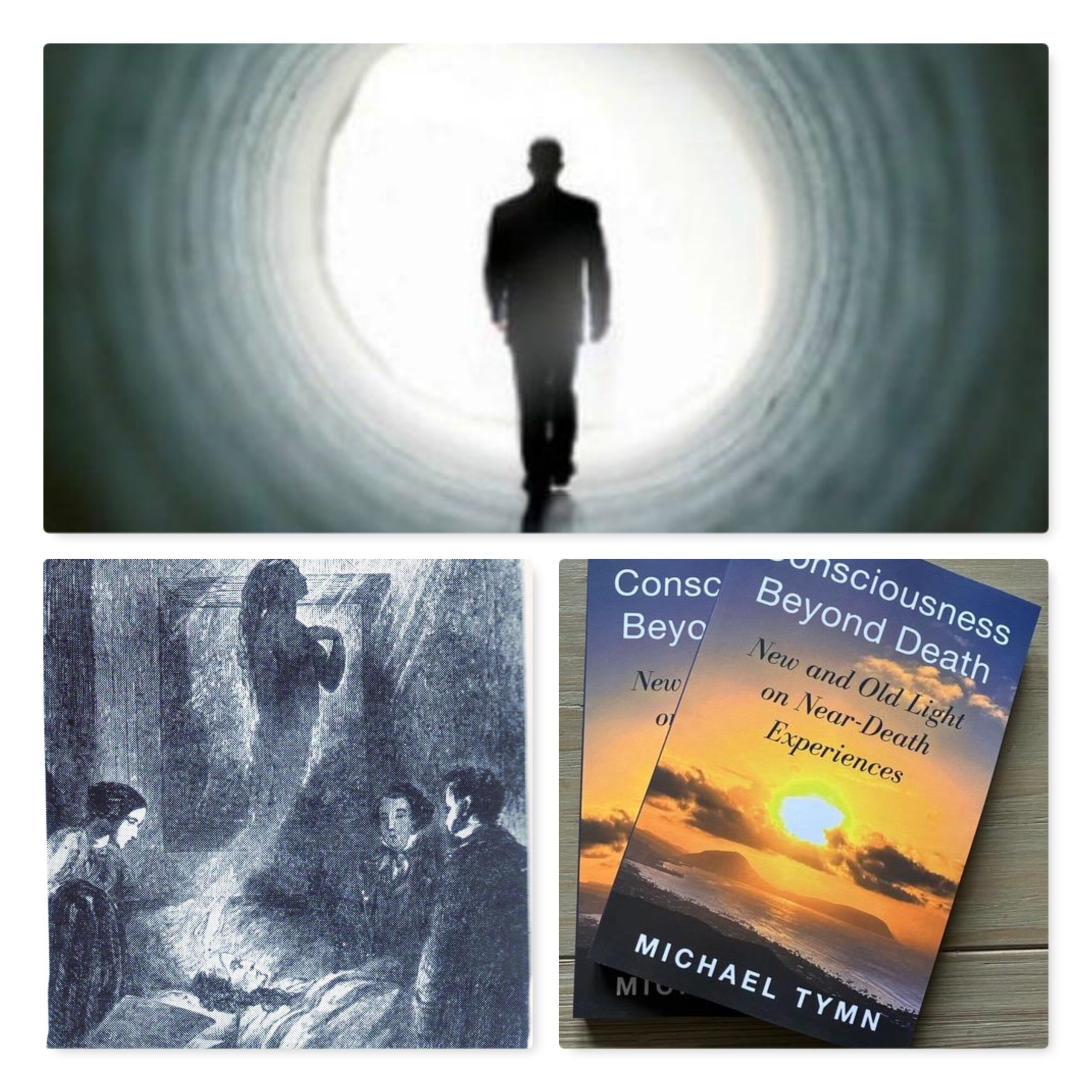
Michael Tymn is the author of The Afterlife Revealed: What Happens After We Die, Resurrecting Leonora Piper: How Science Discovered the Afterlife, Dead Men Talking: Afterlife Communication from World War I. and No One Really Dies: 25 Reasons to Believe in an Afterlife. His latest book Consciousness Beyond Death: New and Old Light on Near-Death Experiences is published by White Crow books.
Next blog post: November 3

Dear Mike. Thank you for this very informative article. I covered this subject a while ago in a very short video,– if anyone is interested. https://youtu.be/UAcOvvnJkr0?si=6b3b6NidxDu9K6MX
Excellent video, Hans. Thanks for sharing.
Thank you, Mike. May I suggest that we ask ourselves one more ‘concern’: “Could it be that death is not a curse, something negative, but maybe a gift for our soul to grow faster? If that would be the case, why would we need organ transplants?” I have explained this in another short video a while back: https://youtu.be/9QTWOBXjaqM?si=Zjdl2No0_CPnRL44
Mike – you raise a lot of great questions and point out that we still don’t have good answers to many of them. Pantheist believe that everything has consciousness, from a stone to a nail to a human being, the cells and atoms in our body the level of consciousness is different than human consciousness, but it is equally indestructible Seth claims in his book that there is no specific fixed point of death, that is a continuum; that some people when they die don’t even know they are dead. But he says nothing about the question of organ transplants, and the soul. He also claims That people deeply desirous I’m remaining in their body after death can look around to find another body to take control of, targeting people who are in a weak mental state from drugs or alcohol,
The Watseka wonder- Lurancy Vennum case provides strong evidence of a dead person can inhabit the body of a living person, at least for extended periods of time but again, it doesn’t involve organ transplant.
Your blog raises some fascinating questions.
Mike S
Hi Mike,
Yes, it would seem the movie would have addressed the soul.
Very interesting article though as usual.
We have faith that whatever happens at our “death” or the soul’s separation from the body, is what we deserve as either an atonement or a test.
In general, just as in everything else, the higher the level of our morality… the easier and more peacefully and easily things proceed.
Best wishes,
Yvonne Limoges
As ever, Michael, thank you for an interesting and well written article. As a physician I’ve thought about this many times. I am leaning towards the idea that we make an artificial distinction between the physical and the spiritual. I suppose I take an idealist view rather than a dualist one. For my part I would see consciousness as primary and everything as as coming from that.
With that in mind I take the various physical and spiritual bodies as being necessary containers which shape undivided oceanic consciousness. As such, each individuated consciousness has to be embodied in some form and this shapes what we term the individual. I think of our various bodies as strung out upon a timeline. If one were to step outside time then one would see something akin to the trunk of a tree. When we are in time we merely pay attention to one section of this trunk.
In the physical we are paying attention to the here and now. In the various spiritual realms we are paying attention to the various hereafter realms. The thing is that this is just a change of perspective. In fact we are simultaneously all of these at once, so to speak.
With this in mind I think it clarified things such as physical problems affecting memory and personality and issues affecting transplants.
Autobiographical memory exists in the whole trunk or timeline of the individual. So someone with dementia is merely casting there attention to a part of the “trunk’ which is not working as it might. Likewise unconsciousness. That part of the ‘trunk” cannot hold a pint of view. But switch to a part farther along and memory and function are recovered.
With transplantation one can imagine that part of whatever constituted that individual is now somewhere else. It may certainly then play a part in forming the shape of that individual’s spirit (in much the same way as a jug forms the shape of the water it contains while it is within the jug) and one might expect that this may carry over into the recipient’s identity and consciousness.
But the donor has shifted attention to a point along his “trunk” or world line where their spiritual body is now functioning.
I suppose taken as a whole one might envisage some information sharing between donor and recipient.
But in the long term I take it as a given that everything is one anyway.
I guess I am coming around to the idea that one cannot have disembodied individuated consciousness. One always requires a body of some sort to form the spirit it contains. And these bodies are complex and not necessarily as solitary as we think.
A closing thought: all of the molecules currently making up your body ha r passed through countless generations of plants and animals many times before.
Thank you, Ian, for your meaningful macro perspective. Can I ask you for a micro perspective in this hypothetical case: A friend’s five-year-old daughter has just died and he asks for your advice relative to donating her organs. Considering what von Lommel says relative to the “violent reflex reaction” and the need for anesthesia, what do you advise? Or, more directly, if it were your daughter, what would you do?
It’s all very well me being philosophical but it’s an insult to discuss philosophy with a starving man!
I’m afraid I cannot say. I have had patients who donated their organs and it has given great comfort for their relatives to know that the loss of their loved one has helped someone else.
Can’t say what I would do.
Interestingly enough in the UK we are all enrolled as donors by default by a new law.
As ever I can see all sides and remain confused.
Silver Birch was not enamoured of organ transplants but he came from a cosmic perspective.
Sorry I can’t be any more specific but I have come to no firm conclusion other than let people make up their own minds if (heaven forbid) it ever comes to pass.
While this blog raises some interesting questions, I hope that it doesn’t discourage anyone from being an organ or tissue donor. If there is anything left in my aged corpse that can save or enhance the life of another, even though it hinder my exit from mortality, then I choose to make that sacrifice. I suspect that by the time I am summoned, I will be more than happy to give up the ghost. I see the act as little more significant than donating my clothes at death to a charity.
There are many questions about the ethics of organ transplants, but I believe that the effect on the former resident of the body is the least concern. I am not in a position to judge a person who, like Sylvia, requires the heart and lungs of another in order to carry on in the world. Many would argue that organ donation gives meaning and a silver lining to what otherwise seems a senseless and tragic accident.
In life our bodies are permeated with “soul stuff” and presumably some naturally remains with the body and passes on to organisms that hasten decay or is dissipated in cremation. Life to life. Spirit to spirit. In corporeal living, we effect others and perhaps influence their personality and mental views. That our tissues and organs might retain something of our essence and pass it on to others seems an added bonus to me.
I agree, David. Personally, if organs from my dead body can save a life, they are welcome to it.
I agree with David and Jon, although my organs are now too old for donation. However, I have wondered if it were my five-year-old child being declared clinically dead, would I, considering van Lommel’s comments about “violent reflexes” often requiring anesthesia, be so willing. I’d also have to factor in Hans’ concern, which is what this blog is aimed at in the first place.
Michael…
“…my organs are now too old for donation…”
Just checked the organdonor.gov website, and they’re still saying that there is NO age limit for donation, citing the example of a 95-year old man whose liver was used for 20 some odd recipients.
You (nor I) can’t get off that easily…
Don
Don, Hadn’t heard that, although it could vary by state law. If nothing else, I’ve asked my wife to wait seven days before cremation, as suggested by Raymond Lodge.
Here is what Silver Birch had to say on this issue. “I know about transplants, and am aware that the motive is often a very good one,” said Silver Birch, the spirit who communicated through British trance medium Maurice Barbanell for many year. “But I must say that I am opposed to transplanting any part of the human body to other people.” Although Silver Birch never fully identified himself, indications were that his Indian name was a convenient persona behind a very spiritually-evolved soul. Until shortly before Barbanell’s death in 1981, Silver Birch delivered lectures and answered questions about every possible subject relating to the meaning of life and the evolution of the soul. Silver Birch added that doctors cannot judge when death takes place and that death is final only when the silver cord is severed and the spirit body leaves the physical one. “When that severance has taken place, no medical man can make that body live again,” Silver Birch said.
But Silver Birch often mentioned that although he came from a realm with a considerably higher vibration than earth, he had not evolved to the point where he had knowledge of all things. He frequently prefaced his remarks, including those on transplants, by saying it was simply his opinion. “I do not think, from my point of view, and I speak only for myself, that the sustaining of the physical body must be the be-all of every endeavor,” he offered at one sitting. “I maintain that man should be instructed how to live aright, spiritually, mentally and physically. If he thinks right, then he behaves right and his body will be right. The solution is not the transfer of bodily parts. The solution is for every man to order himself to live as the Great Spirit intended. Man must have compassion for other men and for all the creatures with whom he shares his planet. They were not placed here by the Great Spirit to be used as experiments, to prolong the physical life of man.”
Organ donation, cremation, or donation of a cadaver to a medical school–I favor all of these. How and exactly when we dislodge ourselves from our body is an interesting question for many, but for me there are only two really big questions: whether we have a future life at all and how the habits of a lifetime affect the quality of that future life. That aside, thanks for the great essay, Michael.
Thanks, Stafford. I agree, but after some 500 blogs, I find space for the “little” questions as well.
Michael,
A very thought provoking article. I was working for Department Of Science when the receptionist handed me a call. “This lady wants to leave her body to Science.” I have a strange sense of humor. I asked “What sort of body are we talking about? We are very particular.” She said she was in her forties etc. I finally worked out that she was sincere and as we had no facility to accept bodies I explained the meaning of the term. I then explained the process of donating her body via medical schools at universities. She was a freelance reporter (she didn’t have Google as it was not invented then) searching for an answer.
I then asked the Spiritualist group I belonged to their view. The group was equally split between Yes for organ donation and No. The Yes wanted to help others.
The Nos were worried about the spirit not making a clean break. Residual stay on Earth. The discussion then went to cremation or burial. Again a split. For a clean break a cremation is preferred. The feeling was that a spirit is attached to the body and needs to await release. The Raymond comment expressed it well. Sometimes the full transition is delayed. The Tibetan Book of the Dead was mentioned as our training manual.
Again, a very interesting article. These articles address the difficult questions.
I remember a movie that involved an eye transplant and the physical recipient had spiritual sight. Our discussion group then spoke about the effect of organ donation from a medium to another person. Would their abilities transfer?
Tough questions,
Thanks
Bruce
Thanks, Bruce. It seems highly unlikely that the medical profession will ever give it much consideration, as to do so would be to endorse a non-materialistic worldview and invite much scorn and criticism.