
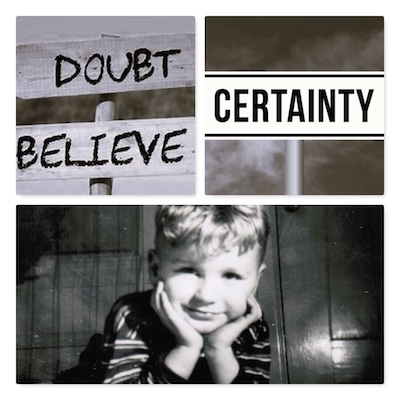
It has been suggested by various philosophers that having absolute certainty of consciousness surviving death is not in humanity’s best interest. To put it another way, some doubt on this concern is necessary for humanity to flourish. I was curious as to what Artificial Intelligence (AI) has to say on this matter and asked for “its” thoughts.
“This is a thoughtful question, and it has a long philosophical pedigree,” it (ChatGPT) responded. “I’ll try to respond in a way that takes the concern rather seriously rather than dismissing it as mere speculation.” (It should be noted that I asked AI which pronoun I should use in referencing “it” and it replied that “it” is proper, not “he” or “she,” although “they” would be acceptable.)
AI then went on to say that the suggestion I was referring to rests on a “prudential or evolutionary argument, not a truth claim” and reworded it to say: “Even if survival of consciousness after death were true, absolute certainty of it might have destabilizing consequences for human behavior and social order.” First among the arguments for the necessity of doubt, it listed “existential urgency,” explaining that “if life is known to be one chapter in an endless story, this life might be devalued.” It went on to say that mortality sharpens attention, compassion, and responsibility now, rather than deferring meaning to ‘later,’ and that uncertainty forces moral autonomy. “Absolute certainty would collapse diversity of worldview in ways that might be socially brittle.”
AI draws from Sǿren Kierkegaard, William James, Miguel de Unamuno, Henri-Louis Bergson, and Paul Tillich to support the uncertainty premises. Kierkegaard, often referred to as the “father of existentialism,” held that “ethical responsibility arises precisely because outcomes are uncertain” and that “objective certainty destroys authentic inwardness.” Professor James argued that “certainty can short-circuit moral development if it removes existential risk.” Spanish philosopher de Unamuno held that “certainty of immortality would cheapen life, yet certainty of annihilation would destroy meaning.” As French philosopher Bergson saw it, “intellect is ill-suited to grasp it fully.”
Tillich, a German-American philosopher, concluded that “certainty would eliminate anxiety, but also eliminate courage.”
Interestingly, AI further pointed out that some of the pioneers of psychical research resisted claims of final certainty. Frederic W. H. Myers, who argued that the evidence strongly favors survival, is said to have “hinted” that “full certainty may not be compatible with embodied human life.” Richard Hodgson feared that premature certainty would corrupt inquiry and invite dogma. Professor James Hyslop saw doubt as a safeguard against religious authoritarianism, while Sir Oliver Lodge stated that “public, universal certainty might be socially disruptive.” Lodge further stated that his personal certainty was not transferable.
But AI didn’t stop there. It then cited the works of NDE researchers, including Drs. Raymond Moody, Bruce Greyson, and Pim van Lommel, stating that a recurring theme in NDE research is that “absolute conclusions are avoided – not merely for reputational safety, but because the data resist closure.”
Percentage of Certainty
I then put this question to AI: “If we put ‘absolute certainty’ at 100% and ‘sitting on the fence’ at 50%, what percent do you think is best for society to thrive?” AI immediately responded: “Around 65-70%” It described its position as “strong confidence without compulsion, conviction without closure.” It further offered that 50%, or true fence-sitting, tends to produce “existential paralysis rather than engagement” as well as “a drift toward default materialism in practice, (‘live as if it ends).” It added that, historically, societies that hover too close to 50% tend to oscillate between nihilism and dogmatism.
But why only 65-70%? “This range allows for several healthy dynamics at the same time,” was the response, listing reduced death anxiety, preservation of responsibility, ethical internalization, pluralism and humility, and transformational power without dogma.” I didn’t mention that I have long been at 98.8% in my conviction, but AI recognized that many “experiencers” report something like 80-90% personal certainty and opined that near-certainty risks a moral hazard (“this life is only provisional”), diminished urgency for justice here and now, susceptibility to authoritarian systems claiming privileged knowledge of the afterlife, and fanaticism rather than humility. “Absolute certainty,” it said, “collapses the ethical tensions that thinkers like Unamuno, James, and Tillich saw as essential to moral seriousness.”
The bottom line, AI ended, is that “if society knew too little, it would despair; if it knew too much, it might trivialize life. A lean toward survival, held with humility, appears to be the sweet spot.” Nevertheless, AI also recognized that the “right percentage” may differ privately and publicly and that a “higher confidence” can be psychologically and morally enriching. Its final comment was: “Your question gets at something subtle and important: not ‘Is survival true?’ but ‘How much knowing can human society bear and still grow?’”
I think I’ve done my best to avoid “fanaticism,” in this blog, but I admit that some of my relatives and friends think I’m a “religious nut,” which seems to be another name for a fanatic. My New Year’s resolution is to become less fanatic. I’ll begin by saying that I’ll never be at 100% certainty. In fact, I have doubts about being at 100% after I die. Happy New Year to all!
Michael Tymn is the author of The Afterlife Revealed: What Happens After We Die, Resurrecting Leonora Piper: How Science Discovered the Afterlife, Dead Men Talking: Afterlife Communication from World War I. and No One Really Dies: 25 Reasons to Believe in an Afterlife. His latest book Consciousness Beyond Death: New and Old Light on Near-Death Experiences is published by White Crow books.

Hi Mike,
Coincidentally, your post couldn’t have been more timely for me as I just finished reading The Barbanell Report, A Journey Into the Afterlife by Paul Beard, Marie Cherrie, and Maurice Barbanell.
Without giving away too much for those who might be interested in reading the book, which I highly recommend, Maurice Barbanell, from the other side, finishes his final thoughts on the matter with precisely this topic in his dialogues with his old friend Peter Beard.
Apparently the pros and cons of us knowing with absolute certainty of the survival of consciousness is also a topic of discussion in the Spirit world. If growth and development, they say, is the ultimate objective of our eternal Self, then full knowledge is not in our best interest. Our greatest opportunity for growth comes from the lessons we learn dealing with the Unknown.
Your closing paragraph seems to nail it. “The bottom line, AI ended, is that “if society knew too little, it would despair; if it knew too much, it might trivialize life. A lean toward survival, held with humility, appears to be the sweet spot.” Nevertheless, AI also recognized that the “right percentage” may differ privately and publicly and that a “higher confidence” can be psychologically and morally enriching. Its final comment was: “Your question gets at something subtle and important: not ‘Is survival true?’ but ‘How much knowing can human society bear and still grow?’”
Thanks for continuing to burn the flame, Mike. I look forward to many more postings from you.
All the best,
Dave Daughters
An excellent and interesting approach to the issue, Michael. I was impressed by the width of knowledge regarding authors that were exhibited by the A.I. and I guess as time goes by, and A.I. keeps learning from all the future incoming information it receives, that the views expressed in response to such questions as this will change. So perhaps you could try asking the same question again in the future and do a ‘compare and contrast’ exercise. Like you I am in the 98.8% certainty range based on the evidence; but that is not the same as knowing with certainty what it will be like for me once I get there!
The work of Dr Patrizio Tressoldi at the University of Padua in Italy regarding A.I.’s ability to understand what the afterlife might be like is worth your attention. You can find my description of some of it in my video ‘Spirits Talking: Can they be trusted?” https://www.youtube.com/watch?v=f-eaqftiCQs&list=PLLB-82YMhiPFPKSm2Ke69aK0DKTftpvo0&index=54&t=221s
I wish you Michael, White Crow’s Jon Beecher, and all your readers a personal Happy New Year – despite my own foreboding regarding the outcomes in international relations, economics & politics in 2026.
Happy New Year Keith! Look forward to more comments in 2026, and possibly a doc? 🙂
A fascinating, challenging response by AI. But it overlooks one thing of immense importance. If you are 100% sure that you live beyond death but also that a law of karma determines what kind of afterlife you get, no relaxation of dedication to a common good results, but rather an enhancement. At least that is the way I personally experience it. An example: I volunteer three mornings a week at a local elementary school teaching second and third graders reading skills. Why? Not only because I see this as a much needed service to society, but because the law of karma goads me on to provide the service. Without a belief in a karma-induced afterlife, would I bother? Probably not. It’s rewarding but at times hard work. The labor I put into the videos I make for TikTok and YouTube is also due to this heavenly goading. Critics will say I’m just being selfish in a noble way. I don’t deny that. But so what? I’m helping make the world a better place. Anything that inspires that is to be blessed and encouraged–and rewarded. Belief in a karmic worldview by 100% of earth’s inhabitants would generate a more just world. And a more confident belief by believers, say from 65% up to 90%, would also. Having said that, I find enough evidence of some kind of afterlife to be to be 100% certain, but of a karmic afterlife less certain. Is that enough to keep me free of dogmatic arrogance and moral complacency? I think it is.
We should not let the pervasive materialism surrounding us chip away at our conviction to a measly 65%. We should confidently tell the world that the evidence leaves no doubt.
I too wonder about motivation in presumed karmic enhancement. If we perform a kind deed in the belief it will be a good afterlife résumé item, does that knock down its karmic value?
Or is the result of the action all that counts as long as it was intended to be beneficial?
What karma results from a well-intentioned act that, through ignorance or misunderstanding, has a negative effect?
I’m with you. I am 100% on the afterlife but not so clear on the details.. I think philosophers tend to make generic claims (much like theologians) when a social science survey of people with different beliefs might be more revealing. But perhaps no such studies exist or AI is not directed to them?
What a pleasure to see your commenting here, Dr. Betty! Maybe you do it regularly since you’re friends with Mr. Tymn but I haven’t visited these comments for awhile. Anyway, I found Michael’s article insightful as well as your reply. I wonder if we could see karma points as simply an encouragement (incentive) to lean into discovering the deeper joy of doing good works.
As for the afterlife souls not wanting us to be 100% certain, I wonder if that’s why projects like the SoulPhone has yet to work and may never work…
You are no religious nut Michael
We only examine evidence in any particular avenue of inquiry along with our individual experiences. No one can be 100% certain of any conclusions derived from our efforts.
Michael,
I came across this article recently by Dr. Jörg Storm (I just don’t read obscure psychic material).
“One AI Won’t Save You, But May Be Four Will..
Most people use one AI for everything and that’s why their results sound generic.
The truth is, no single model can do it all. Each has a unique strength, and knowing which one to use is your real advantage.
I don’t just use ChatGPT.
I use four different LLMs for four different purposes, each one trained for a specific kind of thinking.
Once you match the right model to the right task, your output jumps from average to expert.
The real edge isn’t in prompting harder, it’s in choosing smarter. When you know which AI to call on, you stop wasting time tweaking prompts and start getting real results.
Here’s the shift to make now:
● ChatGPT → The all-rounder for fast creation
● Perplexity → The fact-checker for trusted data
● Gemini → The workspace genius for Google tools
● Claude → The deep thinker for long, complex tasks
So, are you still asking “Which AI is best?” or finally asking “Which AI for which task?””
I used to say life is like a person with two watches. You are never too certain which one is correct. Certainty is more relative than absolute in my books. You are seen by your family as fanatic which excuse the pun is a relative assessment. To the readers of your blog you are a thought leader.
I think of AI and the models listed above as tools which are useful to expand thinking but each of these AI gurus comes with their own algorithms to assess certainty. Benjamin Franklin’s quote in 1789 “our new Constitution is now established…but in this world nothing can be said to be certain, except death and taxes”.
Therefore, the lack of certainty about the afterlife should be a position approved by Benjamin but I will check with him later.
Thanks,
Bruce
Mike,
Personally, I’m 100% certain of the continuation of life beyond death — it’s a knowing that I can’t explain — and the more evidence I see the more that certainty is validated. I don’t see any downside and it doesn’t interfere with my life. I would say I’m living a better life as a result. And hopefully I’m a better person… I like to think so anyway. What I’m uncertain of is everything that happens beyond death. I have an idea, but I suspect we can’t really appreciate it or understand it until we experience it. Happy New Year to you and everyone else here. Many thanks to you and Stafford for the articles — and to the commenters for their sagacity. Hopefully we will continue in 2026.
Thanks to all for the comments so far. I should have mentioned that my 1.2% factor is recognizing the small possibility that there is something to Living Agent PSI or Superpsi, whichever name be given to them. It is one thing to accept the reality of telepathy and premonitions, but a real stretch to go beyond them to various complex phenomena coming from psychical research. Nevertheless, LAP/Superpsi can’t be disproved, so therein is my 1.2% doubt.
I’m impressed with ChatGPT’s answers. Since there’s quite a bit of skepticism or downright alarm going around concerning the social implications of AI, it’s soothing to see that it can be thoughtful about a profound topic — including some artificial “worrying” about the implications of near-universal acceptance of survival.
Actually, we have a historical example of more or less complete belief: Christianity in its heyday, especially the middle ages. It was pretty toxic, including a fear of Hell and a strict God “the Father” who demanded to be appeased.
Our contemporary NDErs are, almost by definition, absolutely convinced of a post-mortem existence. They do not seem to show any negative side effects, other than trouble re-integrating into a world where most people around them have not had similar experience.
As Sir Oliver Lodge pointed out, such experience-based knowledge is not transferable. If everyone could have an NDE or something equivalent, it seems likely that the culture-wide result would be benign.
Michael has previously shared the following: Victor Hugo asked the communicating spirit who claimed to be Martin Luther why God doesn’t better reveal himself. The reply came:
Presumably this also relates to the efficacy of doubt about surviving death. Were survival a certainty, people might be more inclined to uproot the celestial seed and abort their cycle of incarnation. Indeed, there are cultures that believe it is better to die young, for the body you have at death will be your body for eternity. And some believe that the best death is an honorable sacrifice in battle, or by seppuku, or martyred on the cross or in flame.
However, people neglect the opportunities of life regardless of whether they believe in God or in the afterlife. In the great cosmic story of life throughout the vast universe, of what actual significance is a single little life lived out on a planet that is, itself, a very minor subplot of the great cosmic story. Viewed from a purely material standpoint our entire lives quickly vanish into insignificance.
Immortality and transcendence of the realm of time and space, lends a significance and meaning to the tender celestial seedlings that we nurture here that can’t be measured by the paltry real estate that we occupy in the cosmos.
“However, people neglect the opportunities of life regardless of whether they believe in God or in the afterlife.”
Yes. Those who are convinced of an afterlife might be inclined to coast, neglecting the lessons they need to learn on the earth plane.* But how does that compare with those who reject survival or who don’t bother to investigate the question? The latter are even more likely to waste their time on relatively trivial worldly pursuits.
* I don’t want to reincarnate, no way. I’ve had it with the embodied realm. But we’re often told we can advance spiritually faster in the physical world. Ask me if I care. Because we’re also told there is no time as we know it on the Other Side. How can it then take “longer” to climb the stairway to Heaven when I’m freed from what the apostle Paul called “the body of this death” (Romans 7:24)?
“I don’t want to reincarnate, no way.”
Whether we were drafted or volunteered, something compelled us to plant our boots on the ground in the first place. Was it a sense of duty to the world and our fellow beings? The thrill of adventure? Too much of a good thing?
Our forebears left the comfort of settled cities in the east to go west and pioneer a new frontier. Perhaps we, in our own way, are pioneers too. Clearing the wilderness, ploughing the ground, and planting the celestial seed.
Whether I was drafted or volunteered, I’ve served my time. I want to retire in the afterlife and enjoy whatever modest reward I’ve earned. Why must we muck around on this prison planet to seek the Highest?
Here this comment is the very thing AI warned for that it would not happen. That means you did not understand what has been said by AI. This mindset is exacctly what AI want to avoid.. Well I did not need AI for that. I read all about paranormal, obe , nde etc for a long time. Some weeks ago it came in my mind the very same thing idea what AI came up with. I don’t think it is healty for humanity to know those things. But we can’t on the other hand not help that we know it, since people have NDE and OBE experiences. I myself had OBE experiences. I am not even religious. Religion has nothing to do with a afterlife, it is not life to begin with. It is a quantum consciousness field and we are souls or rather quantum consciousness/ awareness not people not human just soul, spirit what name you want to give it. If it is widely known with full certainty . what do you think would happen, people would start to murder others because of that information, in the sense of ” so what , life goes on right so what would be lost?” See that kind of things you are getting with that mindset. I know already that is not going to work well for population on earth. We are here to gain experience by living the best we can and even we learn from sad things all is in the package and already planned before we come h ere. Well I already disclosed too much now. Seriously think about the consiquences of your mindset.
Were I merely 98.8% certain that as I steer my bicycle into traffic I would arrive at my destination safely, then I would promptly give up my favorite hobby. Even in bike friendly Portland, getting around sometimes requires navigating in traffic. With odds at 98.8%, I’d likely be dead or disabled after 100 rides. Given the critical magnitude of the notion of surviving death itself, I’m inclined to at least grant it the same favorable odds that I do to safe transit.
Thanks for the analogy, David, but I have a hard time relating the risks of a single bike ride to a belief in survival. I get what you are saying about 100 rides, but in my bike-riding days I would have seen the chances of getting hit on my bike as about 99.99%, so I would have risked it.